Organic Marketing: Building Long-Term Authority
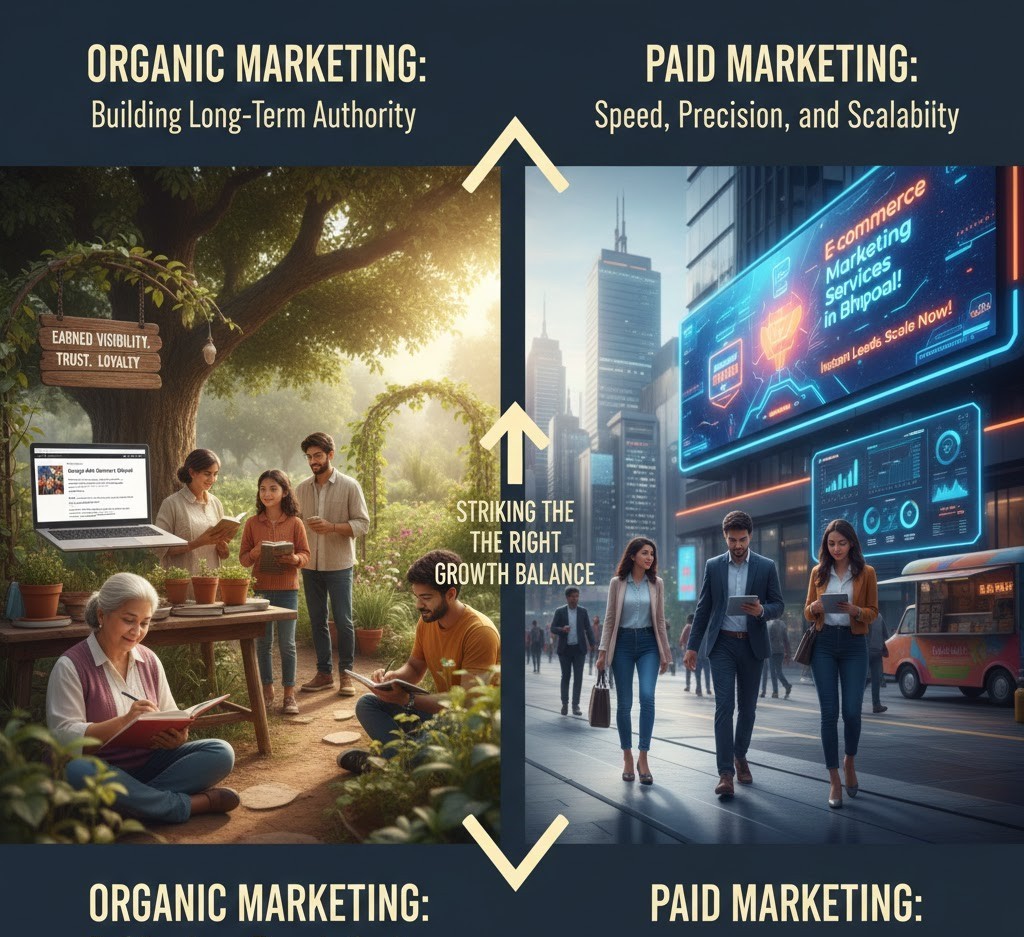
- Organic marketing focuses on earning visibility rather than buying it. This includes SEO, blog content, email marketing, and consistent social media engagement that builds credibility over time.
- While organic growth doesn’t deliver instant results, its strength lies in compounding value. Once your business ranks for high-intent keywords—such as “Google Ads services in Bhopal”—those rankings can continue to generate qualified leads for years without additional spend.
- Organic channels also foster trust and loyalty. Users who discover your brand organically are more likely to stay engaged and return, even when faced with competitive alternatives. Well-crafted content continues to attract, educate, and convert long after it’s published.
- That said, organic marketing requires patience, consistency, and a long-term mindset. Results don’t appear overnight, but when they do, they’re durable and cost-efficient.
Paid Marketing: Speed, Precision, and Scalability
- Paid marketing—often referred to as performance marketing—delivers immediate visibility and measurable results. Platforms like Google Ads, Meta Ads, and LinkedIn Ads allow businesses to reach targeted audiences instantly and scale campaigns with precision.
- Advanced features such as smart bidding and audience segmentation enable marketers to allocate budgets toward high-performing demographics, locations, and user behaviors. For example, a Google Ads campaign targeting “E-commerce marketing services in Bhopal” can begin generating inquiries the same day it goes live.
- The key advantage of paid marketing is speed. However, its limitation is dependency—once the budget stops, so does the traffic. That’s why paid campaigns perform best when supported by strong retention and organic strategies.
How Organic and Paid Work Together
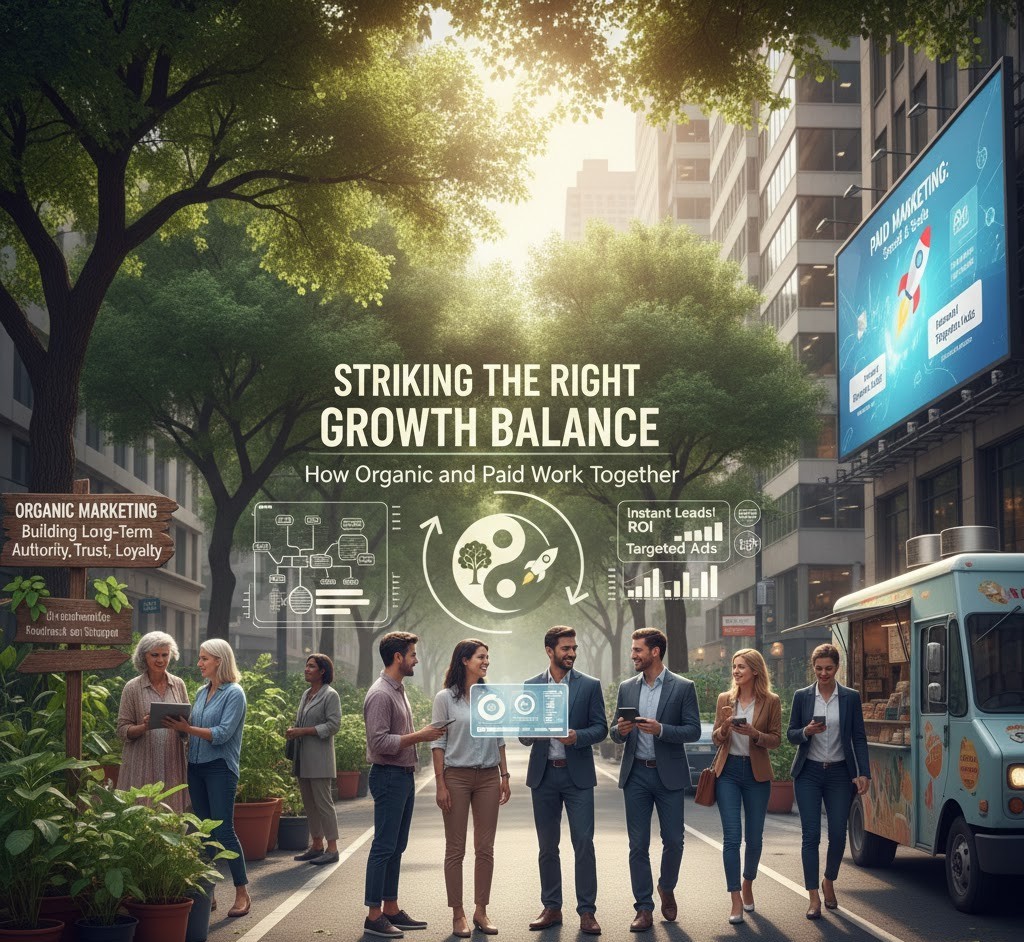
- Think of organic marketing as the foundation and paid marketing as the accelerator. Organic efforts build trust, authority, and brand recall, while paid campaigns provide reach, speed, and scalability.
- When aligned, both channels strengthen each other. Paid campaigns offer valuable insights into audience behavior, messaging, and conversion triggers. These learnings can be fed back into organic content strategies to improve relevance and engagement. Meanwhile, strong organic presence enhances ad performance by boosting credibility and lowering conversion resistance.
The Smart, Balanced Approach
- High-performing businesses don’t rely on a single channel. Instead, they follow a balanced strategy:
- Use paid campaigns to drive immediate leads and revenue
- Invest in organic content to build trust and reduce long-term acquisition costs
- Apply paid campaign insights to refine organic messaging and content topics
- This integrated approach leads to stronger ROI. In many cases, aligning organic authority with paid acquisition can reduce CPA by 30–40% while improving overall conversion quality.
Conclusion: Sustainable Growth Comes from Balance
- Organic marketing builds credibility and long-term value. Paid marketing delivers momentum and scale. When used together, they create a resilient marketing system that drives both short-term results and long-term growth.
- As we move further into 2025, the brands that succeed won’t be those that rely solely on ads or wait endlessly for organic traction. They’ll be the ones that combine performance-driven advertising with a powerful organic presence—creating meaningful experiences, real engagement, and conversions that last.
- At the end of the day, it’s not about clicks or impressions—it’s about building growth that sustains.