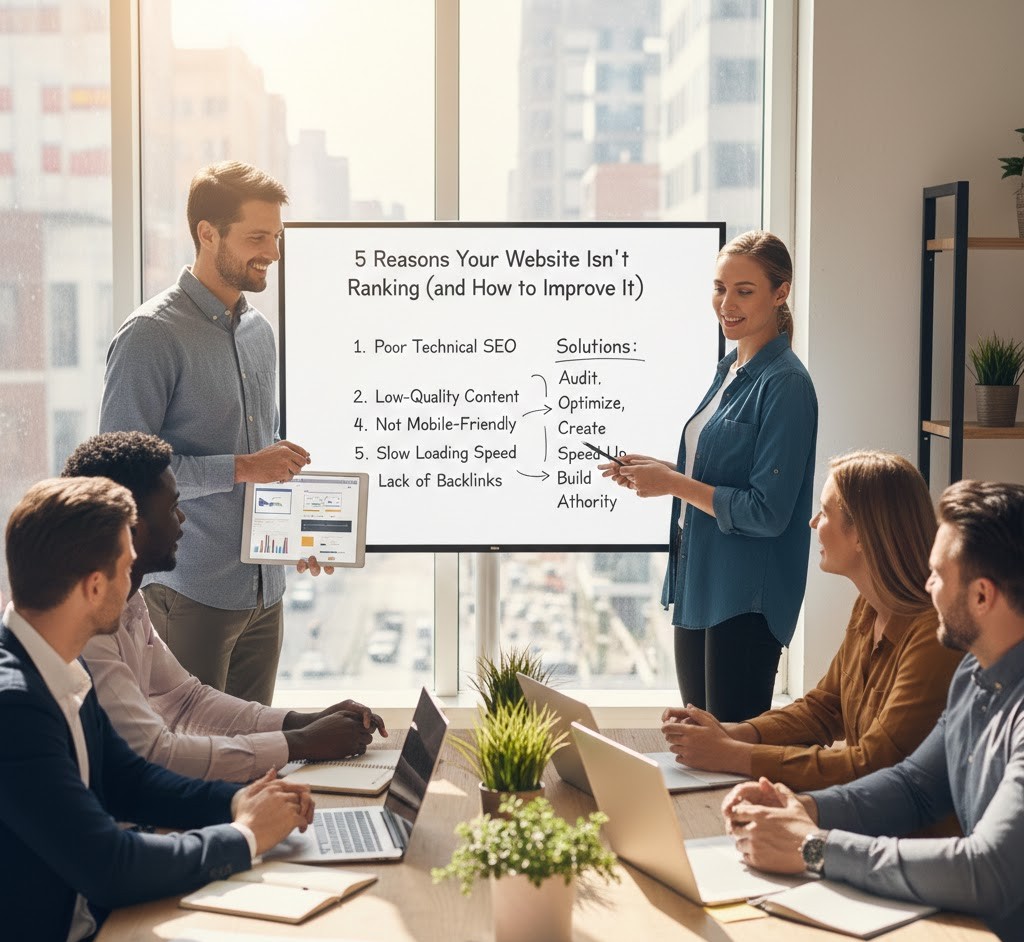
1. Indexing Issues
- If search engines cannot properly index your website, your pages will not appear in search results regardless of content quality. Common indexing problems include:
- Robots.txt Restrictions:
Your robots.txt file may unintentionally block important pages from being crawled by search engines. - Noindex Tags:
Pages marked with a “noindex” tag are excluded from search engine results. - Solution:
Use Google Search Console to monitor your site’s index status. Identify blocked or excluded pages and correct robots.txt settings and meta tags. Once resolved, your pages will become visible and accessible to search engines.
2. Lack of Quality Backlinks
- Backlinks from reputable and relevant websites signal trust and authority to search engines. Without quality backlinks, your website may struggle to compete in rankings.
- Solution:
Focus on earning backlinks through valuable content creation, guest posting on industry websites, and collaborating with influencers or partners. High-quality backlinks significantly improve your domain authority and search performance.
3. Poorly Optimized Content
- Content that is not properly optimized will rarely rank well. Common issues include:
- Keyword Stuffing:
Overusing keywords can lead to penalties and reduce readability. - Irrelevant Content:
Content that does not match user intent or search queries provides little value to users. - Solution:
Conduct keyword research and create content that aligns with your audience’s needs and search intent. Use keywords naturally while focusing on clarity, usefulness, and engagement.
4. Weak Mobile Optimization
- With most users browsing on mobile devices, having a mobile-friendly website is essential. A slow or poorly designed mobile site negatively affects both user experience and rankings.
- Solution:
Adopt a responsive website design and test your site across different devices. Use tools like Google’s Mobile-Friendly Test to identify and fix usability issues. Partnering with professionals can ensure your website is fully optimized for mobile performance.
5. Slow Page Load Speed
- Page speed plays a major role in user satisfaction and search engine rankings. Slow-loading websites increase bounce rates and reduce conversions.
- Solution:
Improve website speed by compressing images, enabling browser caching, and minifying CSS and JavaScript files. Tools like Google PageSpeed Insights can help pinpoint performance issues and recommend improvements.
Conclusion
- Improving your website’s search engine ranking requires continuous monitoring, optimization, and refinement. By addressing critical areas such as indexing, backlink quality, content relevance, mobile usability, and page speed, you create a strong foundation for long-term SEO success.
- Search engine optimization is not a one-time task—it is an ongoing process that demands strategic planning and regular updates. Businesses that consistently invest in technical SEO, content quality, and user experience are far more likely to achieve sustainable growth in organic traffic.
- If you need expert guidance with your digital strategy or website optimization, working with a professional digital marketing agency can help you overcome these challenges and unlock your website’s true potential.